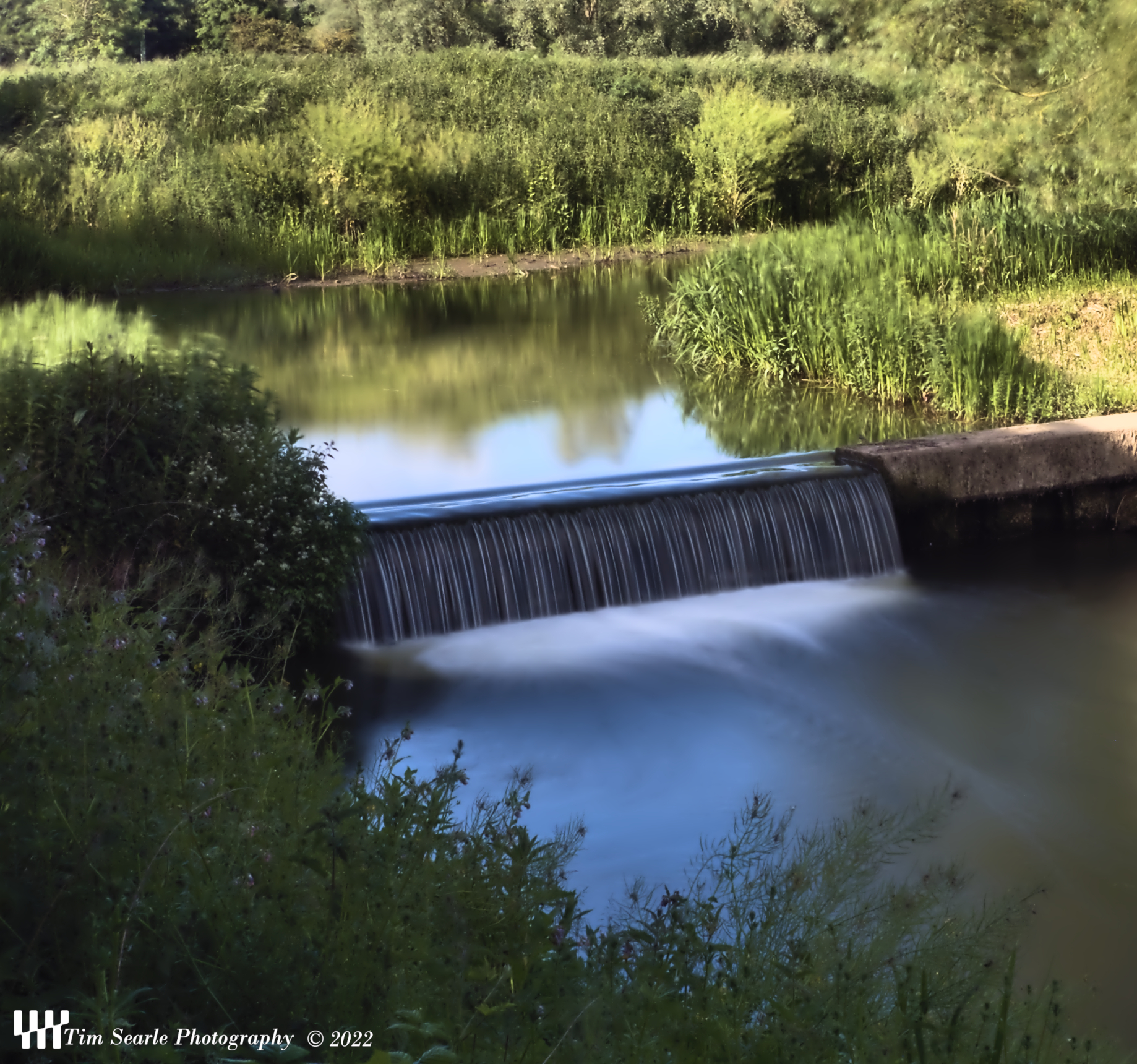
Rivers Waring and Bain Junction
This is one of my first attempts at Long Exposures. Taken at the junction of River Waring and River Bain in Horncastle, the foot bridge made for a great platform for my tripod. The 4 second exposure makes the moving water look like a smooth blur of waterfall, which enhances the overall look of the image. Also, looking at some of the reeds on the bank, you can see where the wind has blown them while the shutter was open for 4 seconds. Apart from the actual waterfall / Wier being smoothed out, the base of the wier with its undulating surface, bubbles & ripples have all been smoothed out. Above the wier was also quite rippley, which too has been smoothed out. With such a long exposure, a fairly low ISO is required.
Olympus OM-D E-M5 Mk iii ~ f11 ~ 4 secs ~ ISO64 ~ 14mm
Aysgarth, Yorkshire
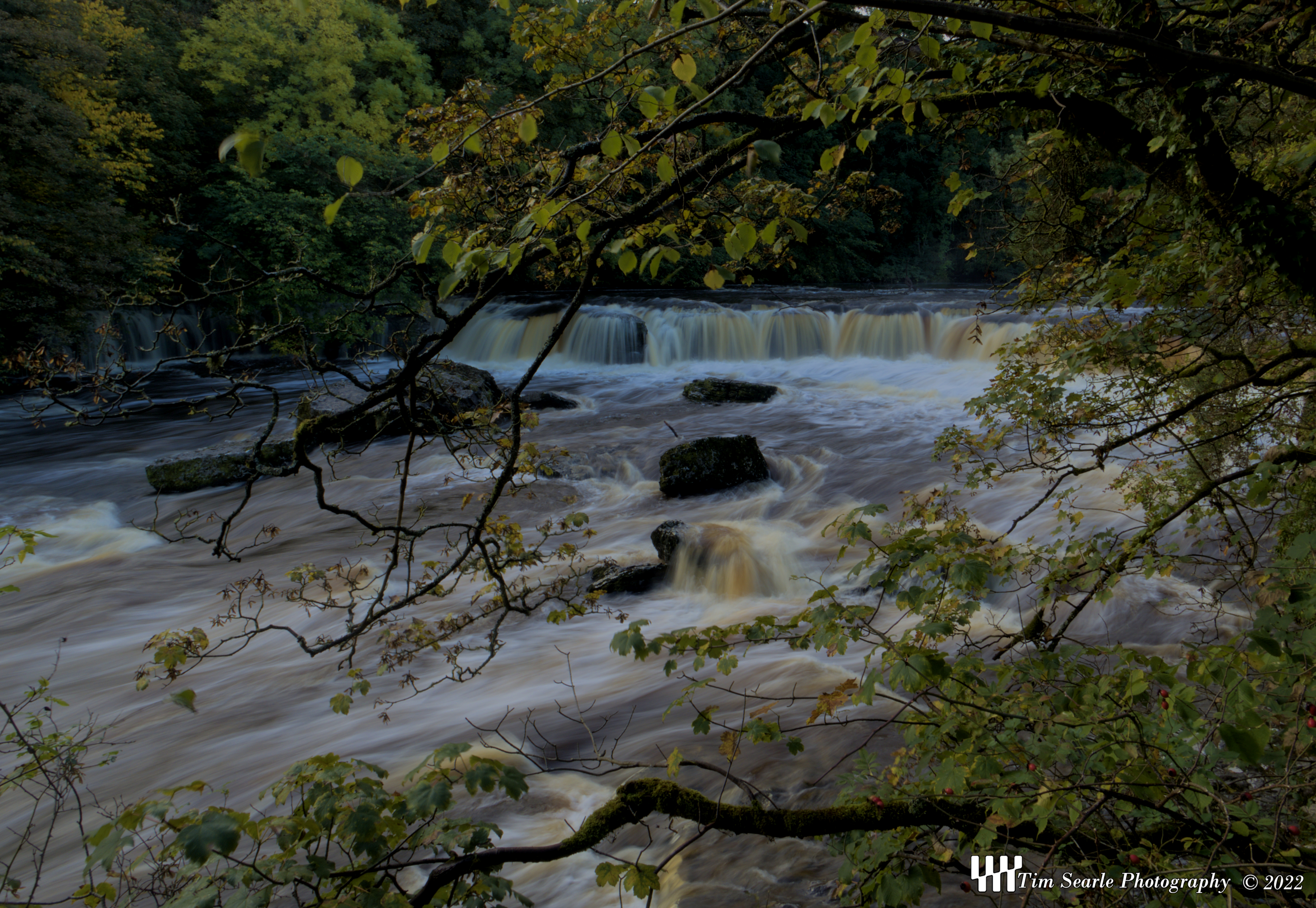
On a trip to Yorkshire in 2022, I happened to spot a tourist waterfall brochour in the Clubhouse. The falls at a place called Aysgarth consisted of three separate falls, and each were unique in their own way, so the group of us who went, decided to venture out there. This was well worth the trip, not just for the views & stunning scenery, but the waterfalls were spectacular. As can be seen by the captures, the smoothness of the water, compared with the crisp sharpness of the tree branches & rock formations, make for a great combination. Notice how the colour of the water is enhanced as it flows across the rocks, and the colour blends the "White-Water" effect as it runs downstream. I managed to get a good result by only slowing the exposure down to 1/2 second, which shows how fast the water was flowing.
OM-D E-M5 mk iii ~ f18 ~ 1/2 sec ~ ISO 64 ~ 12mm
Aysgarth Falls
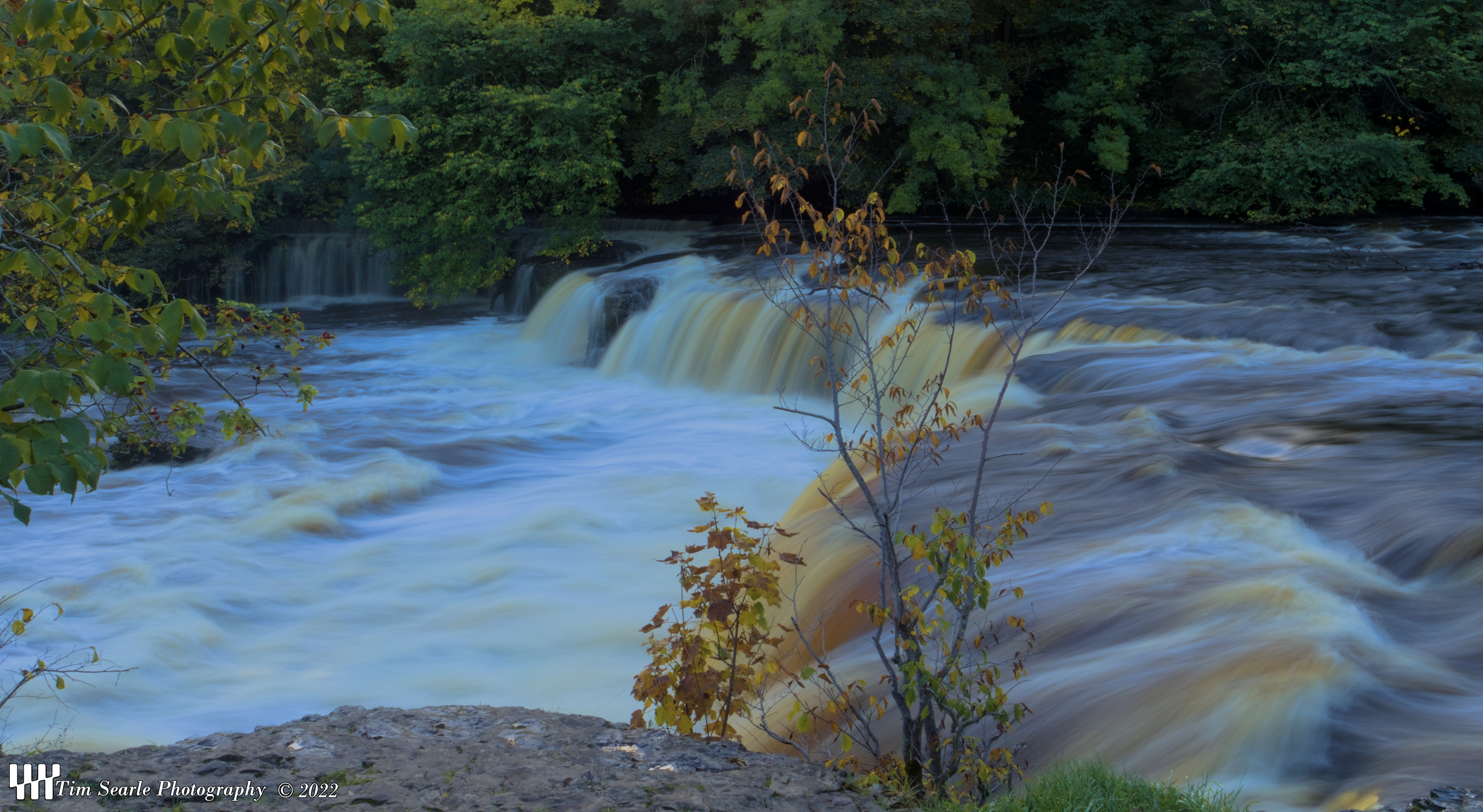
Another picture from Aysgarth Waterfalls in Yorkshire. I will admit now, I took several pictures of these falls. Although there are three separate falls in this area, and they are all slightly different, the overall look to all these images are quite similar. I have tried to capture different backdrops, like trees and rocks, to emphasise the various features of each fall. This particular image captures the foreground rocks and branches, which give more clout to the blurry, smooth waters in the back. The trees and Bokeh features on the far bank give the picture an added level of depth. The settings for this picture are nearly the same as the last one, except that the apature is now at f20 for a greater Field Of Focus.
OM-D E-M5 mk iii ~ f20 ~ 1/2 sec ~ ISO 64 ~ 18mm
Monochromatic Falls
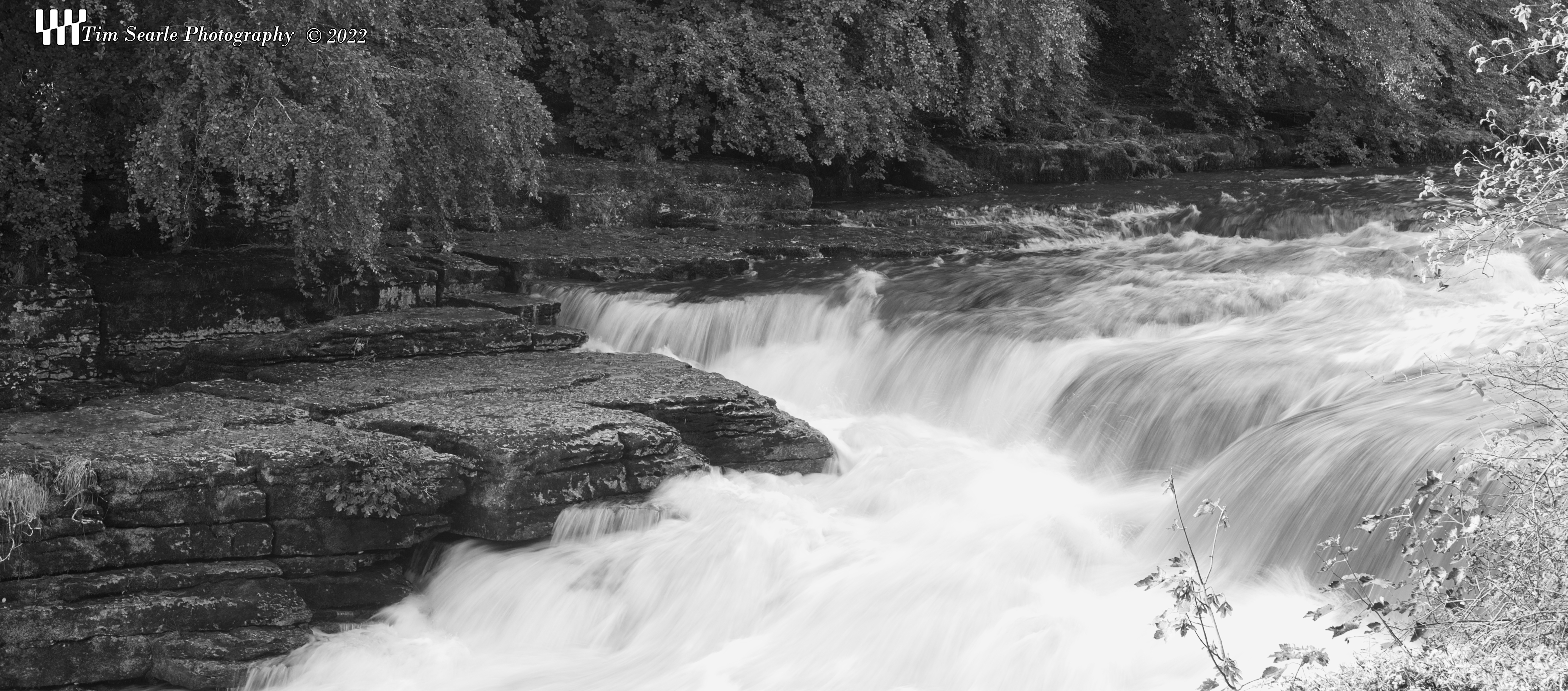
We're still at Aysgarth, but this time, we've gone into Monochrome Mode. Due to the high contrast level of these shots, they look quite good with the colour removed, and a few post-processing tweeks. The settings below are also slightly different to other similar images. For example, 1/8th second is reasonably fast for this type of image, but it helps to keep the contrast suitable for monochromatic adjustments. The low ISO of 64 also helps with the light levels, along side the -1.7 Exposure Compensation, which also does the same thing. This is a 16:9 ratio to show the flow of the water.
OM-D E-M5 mk iii ~ f8 ~ 1/8 sec ~ ISO 64 ~ 31mm ~ -1.7Exp
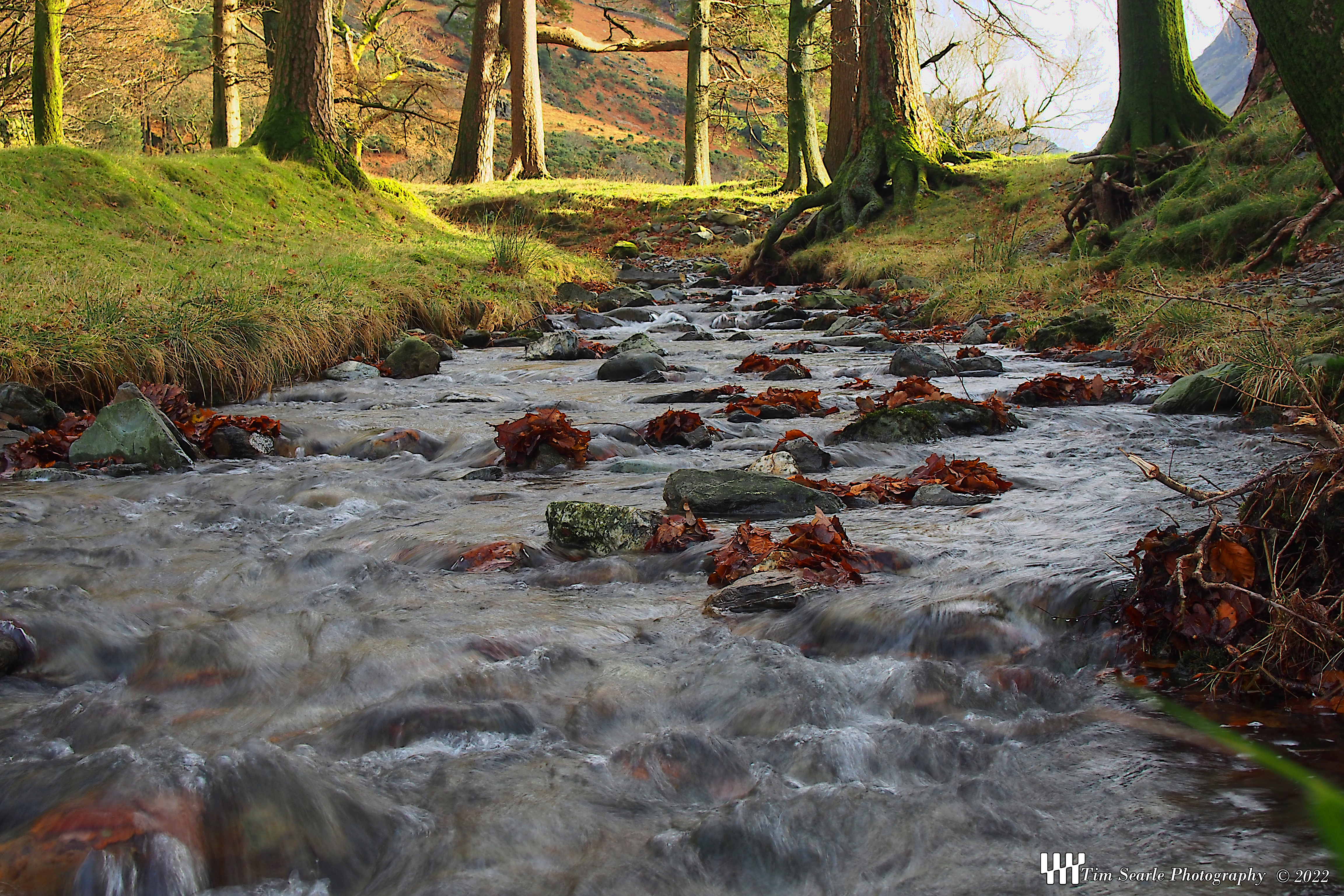
Buttermere Stream
On one of my trips to Cumbria, I spent a day at Buttermere, which is a lovely location to get right up to the waters edge for some dramatic shots. This one was on the way to the mere, being one of the streams running down the hill side. As you can see, the distance is quite substantial, and therefore required the apature to be stopped down to f11. With an ISO of 200, the shutter didn't need to be slowed down too much, just enough to get the effect of Smoothing The Water. As I explained in a previous image, adding non-moving aspects to the image, enhances the smoothing effect of the water, which can be seen by the rocks, leaves and greens surrounding the babbling of the water.
Olympuys PEN E-PL5 ~ f11 ~ 1/15th sec ~ ISO 200 ~ 26mm