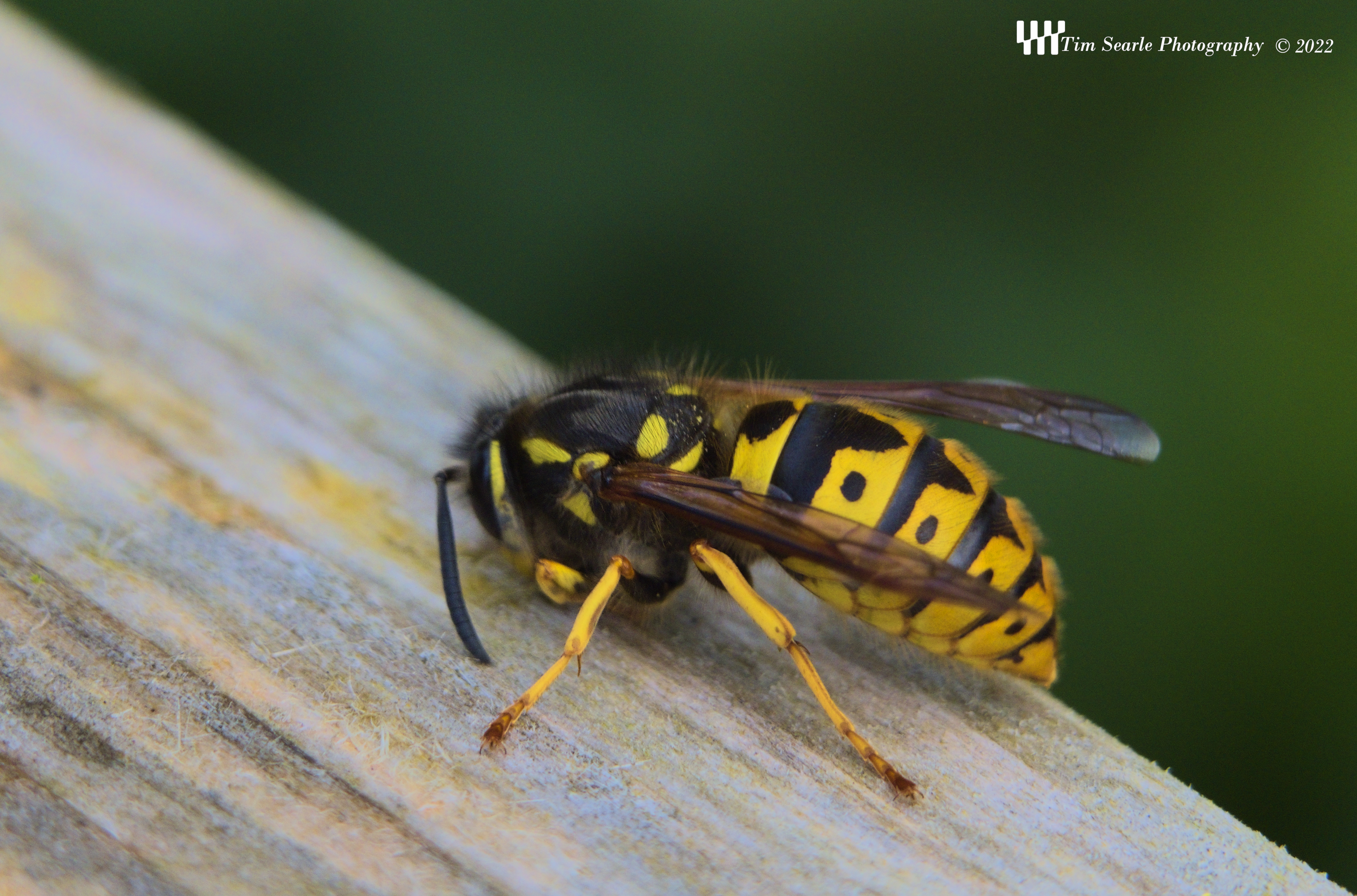
Macro Wasp
This image was taken at Horncastle Community Woodland. This lone wasp was happily munching away on a fence spar, which gave me plenty of time to set up my camera with the Macro Tubes & get close enough to focus while it was distracted. Despite the camera settings below, particularly the focal length, Macro tubes alter this figure, which appears to be at a fairly long distance, the fact is that the lens was only about 20mm away from the critter.
Olympus OMD E-M5 mkiii ~ f6.3 ~ 1/160th ~ ISO250 ~ 94mm
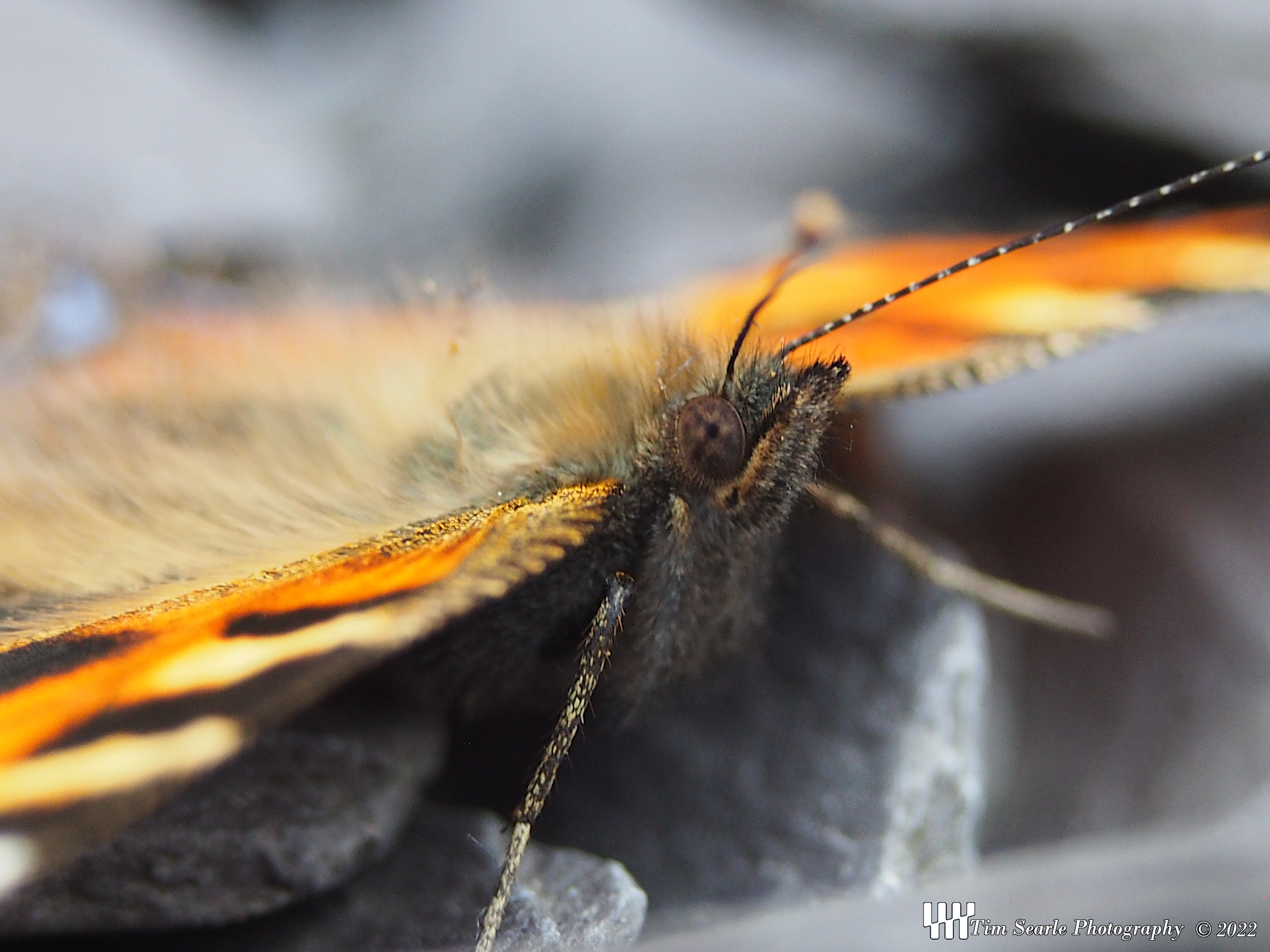
Macro Butterfly
While soaking up the sunshine & warmth in my garden, this Red Admiral butterfly let me get really close for this Macro shot. A point to note on these Extreme close-ups, while trying to get the subject in the screen, and also trying to keep it in focus, it is also important not to block the light from the image - quite an achievement. It often helps when the subject stays in place while working out angles, light readings, focal points and composition. Notice the high ISO to gather as much light as possible, while keeping the shutter speed fast.
Olympus PEN PL-5 ~ f4.5 - 1/125th - ISO640 - 58mm
Sunset Lichen
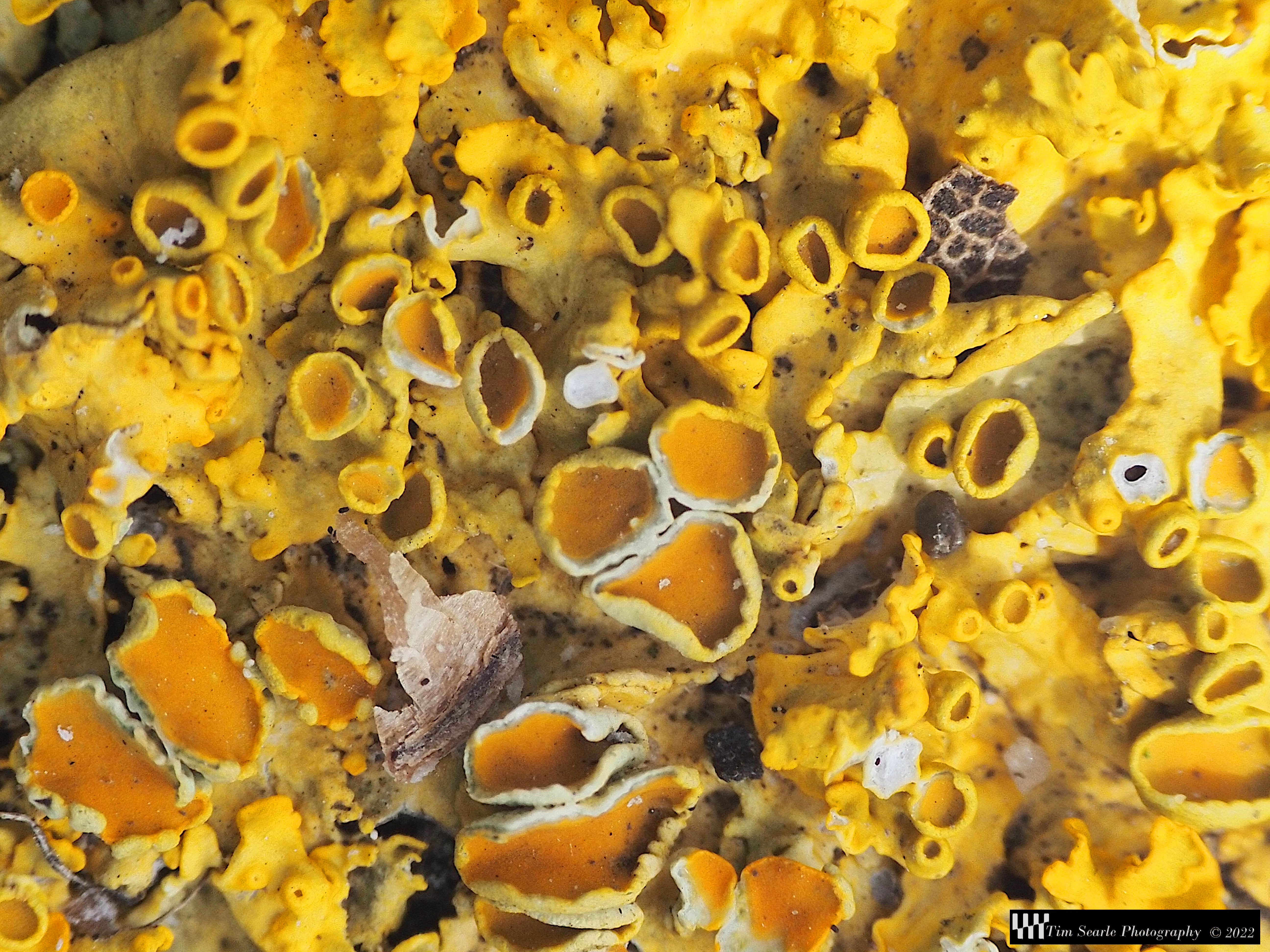
This fungus or Lichen grows nearly everywhere, from tree branches to hedges. Many people don't see it as they're travelling around the Countryside, but it's quite easy to spot. Pull into a layby & look at the overhanging braches of a tree, or the hedgerow, you'll see a Yellow/Green hue to the wood. To be honest, it doesn't look very appealing, until you look really close. Fitting Macro tubes to a lens adds another dimension, making it seem 'Other-worldly'. Because Macro work always decreases the field of focus, I dialled in to f8 to give slightly more f.o.f. Due to the apature being closed down slightly, I raised the ISO to add more light sensitivity.
OM-D E-M5 mkiii ~ f8 ~ 1/250th ~ ISO400 ~ 40mm
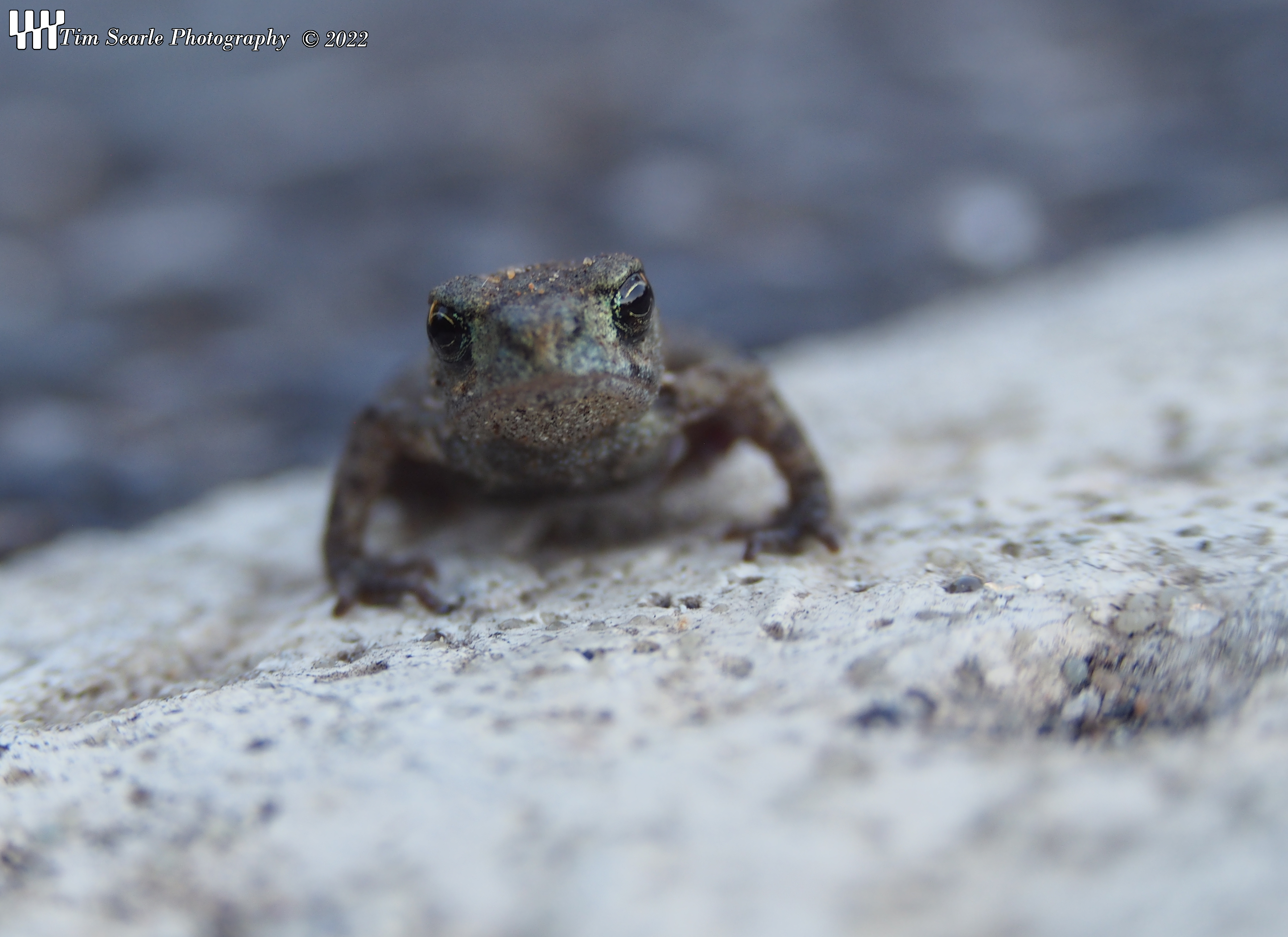
Miniture Frog
Yet another picture taken at Horncastle Community Woodland. This tiny frog caught my eye as it hopped across the tarmac carpark, which was surprising because it was only about 1/2" long. Luckily, I had about 30 minutes spare, which was just as well because that's how long it took to follow it around the car park in an attempt to get something good enough to post here. One of the annoying drawbacks with this style of photography is that creatures so small that they need Macro photography, are the same creatures who usually move fast as soon as you get them in frame and in focus.
Olympus PEN PL-5 ~ f4.5 ~ 1/125th ~ ISO200 ~ 40mm
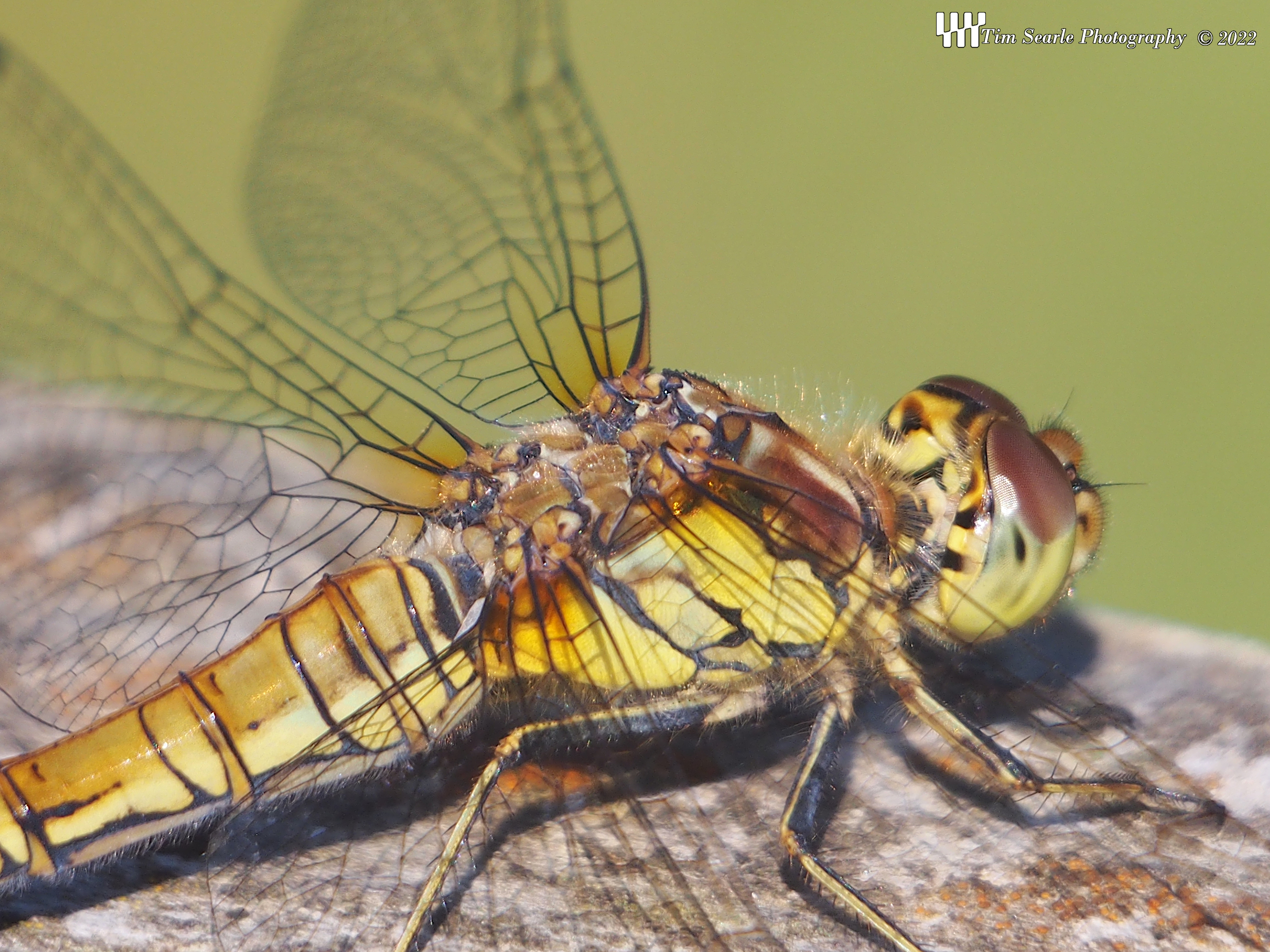
Dragonfly Lace Wings
During the Spring & Summer months, there are usually many Dragonflies sitting on the fence at Horncasle Community Woodland. Because these small creatures are a regular feature, there is no surprise that they are going to be there, which makes for a much more relaxed photography session. Picking the right time of day is key here, ensuring that the sunlight always highlights the colours and details. Notice the focal length of 150mm, because I used my 75 - 150mm lens, I could stay slightly further away from the subject to avoid 'spooking' these timid creatures. The Lacing in the wings is quite spectacular.
Olympus PEN PL-5 ~ f6.3 ~ 1/320th ~ ISO200 ~ 150mm
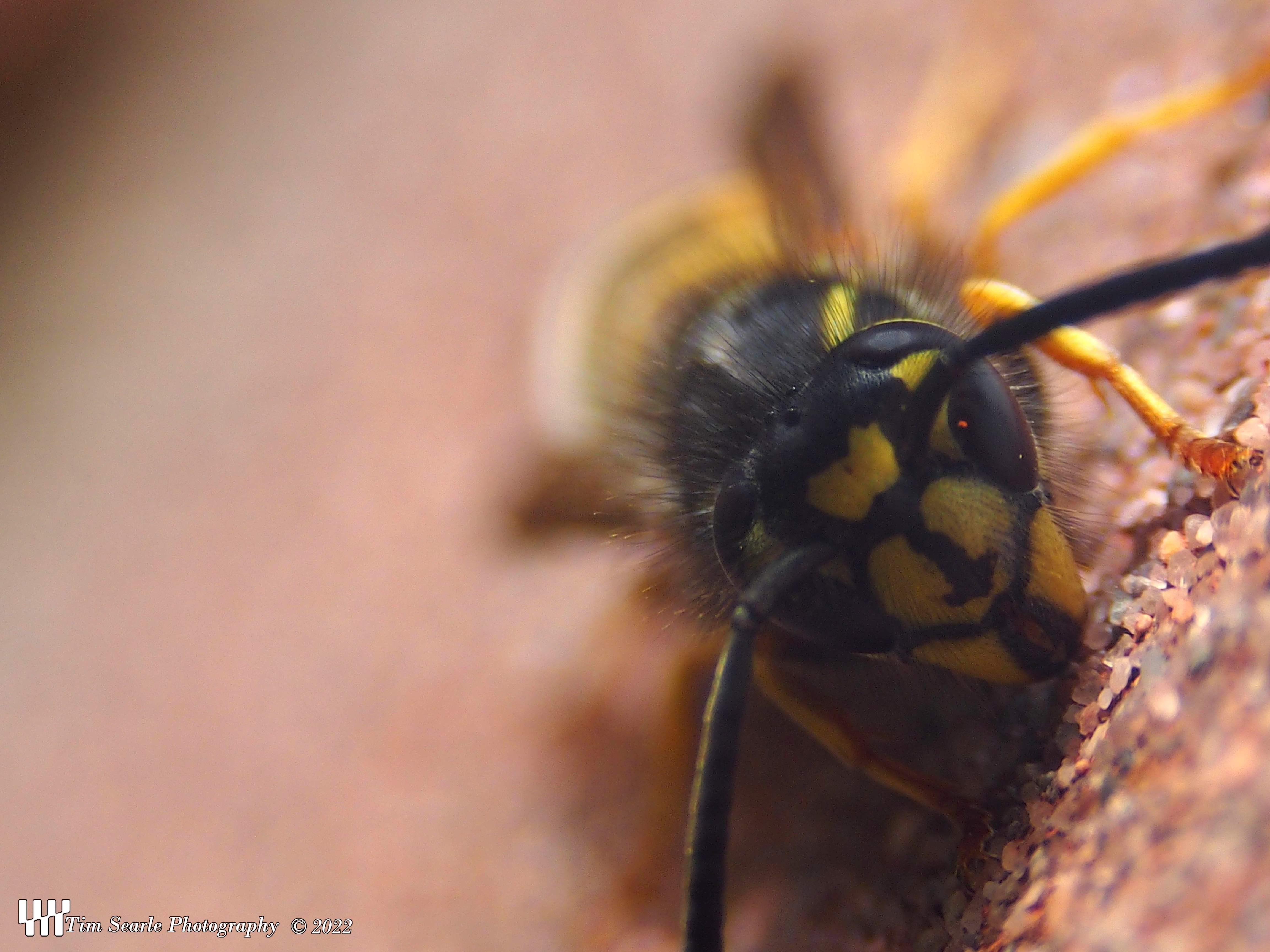
Autumn Lethargic Wasp
I'm sure everyone has noticed how Lothargic some flying insects can be during the Autumnal part of the year, when the temperature cools down. I managed to capture this Wasp on my wall at home. It was just sitting there, so I grabbed my camera & Macro kit. It was a fairly easy task to capture this without it trying to escape, and I managed to get in so close, I got the imperfection in it's eye. The down side of this is that the image is quite dark due to the light being cut out. Just to put the magnification into perspective, the grains under it's feet is actually the surface of the brick.
Olympus PEN E-PL5 ~ f4.5 - 1/100th - ISO200 - 45mm
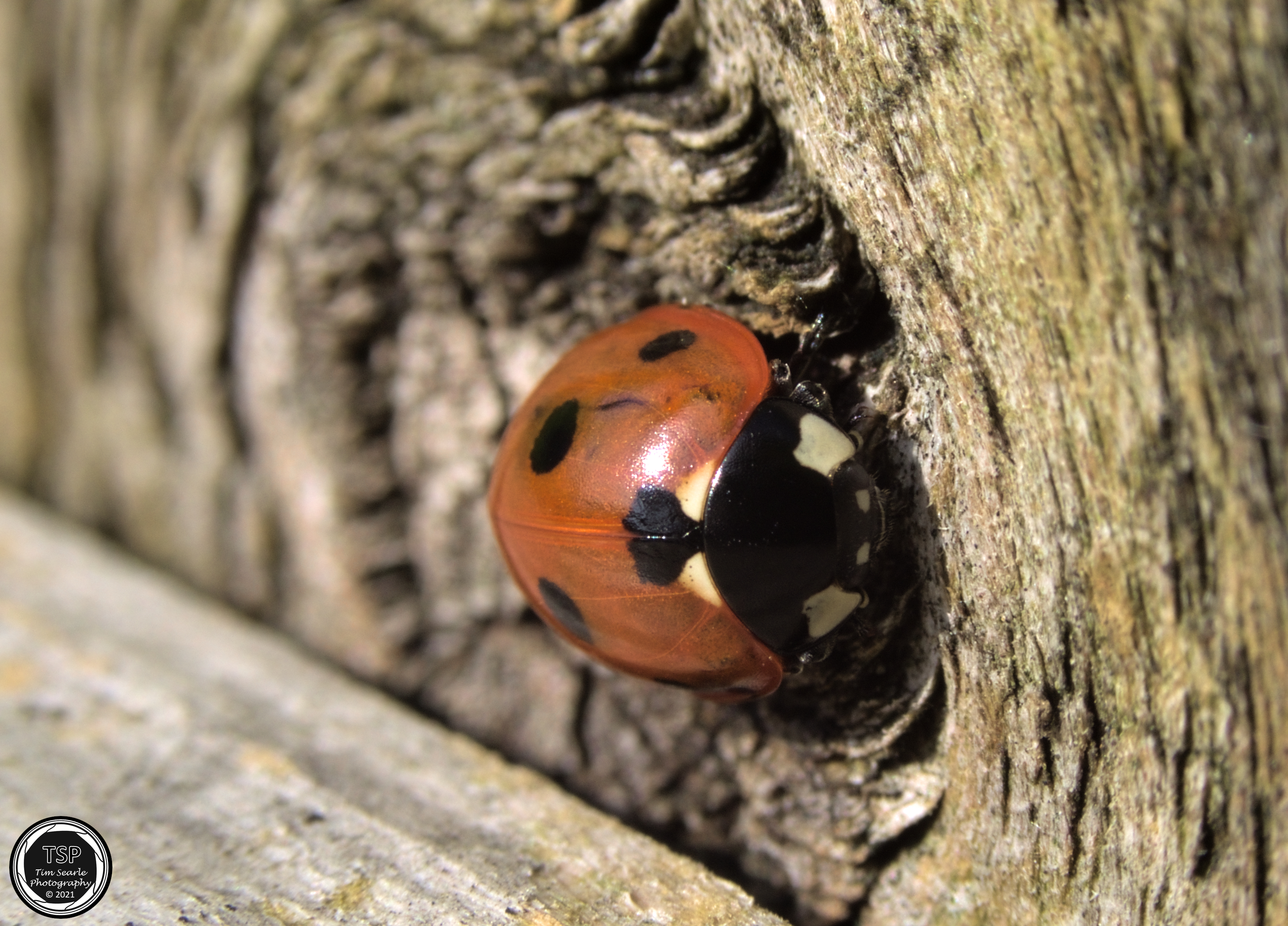
Sunbathing Ladybird
Horncastle Community Woodland, yet again. Needless to say, this is my 'GoTo' location when I have a break in my bus, and I have my camera on me. This time it is Ladybird season, and they're about in all their glory. Although this is a standard 7 Spot Ladybird, several types frequent this area, not least of which is the Harlequin. These are another insect which can spook quite easily, so it's important not to make sudden movements, and also keep out of the sunlight that they're enjoying. Getting the correct angle, distance & Field Of Focus are all important aspects to get right, which is where practice has it's advantages.
Olympus PEN PL-5 ~ f7.1 - 1/250th - ISO400 - 40mm
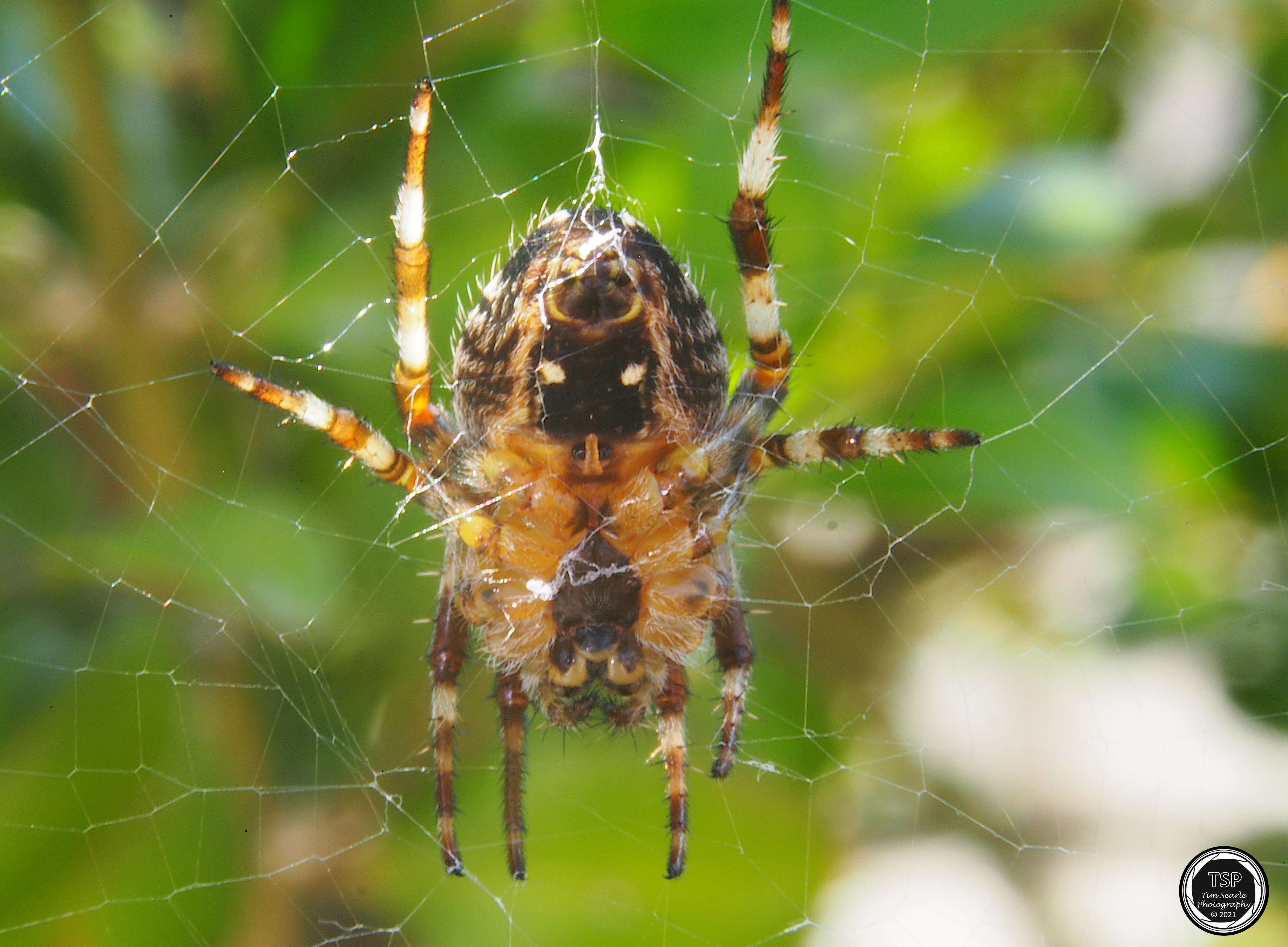
Wolf Spider
There are easy subjects to photograph, and there are difficult subjects. During the summer months, one of the easiest creatures is an ordinary garden spider. They tend to just setup a sunbathing spot in the centre of their web, and sit there, waiting for prey. As long as there is little wind, these are about the easiest to capture. To every Up-side, there will be a Down-side... And with all Macro photography, the extremely narrow Field-Of-Focus can cause major problems. A photographer usually tries to get as much of the subject in focus as possible, but this may involve a technique called Focus Stacking. Taking various parts of the subject in focus, then editing the focused parts in order to get a fully focused picture. f22 will get more in focus, but cuts out some light, which is compensated for by 1/3rd second exposure at ISO200.
OMD PEN E-PL5 - f22 - 1/3th - ISO400 - 40mm
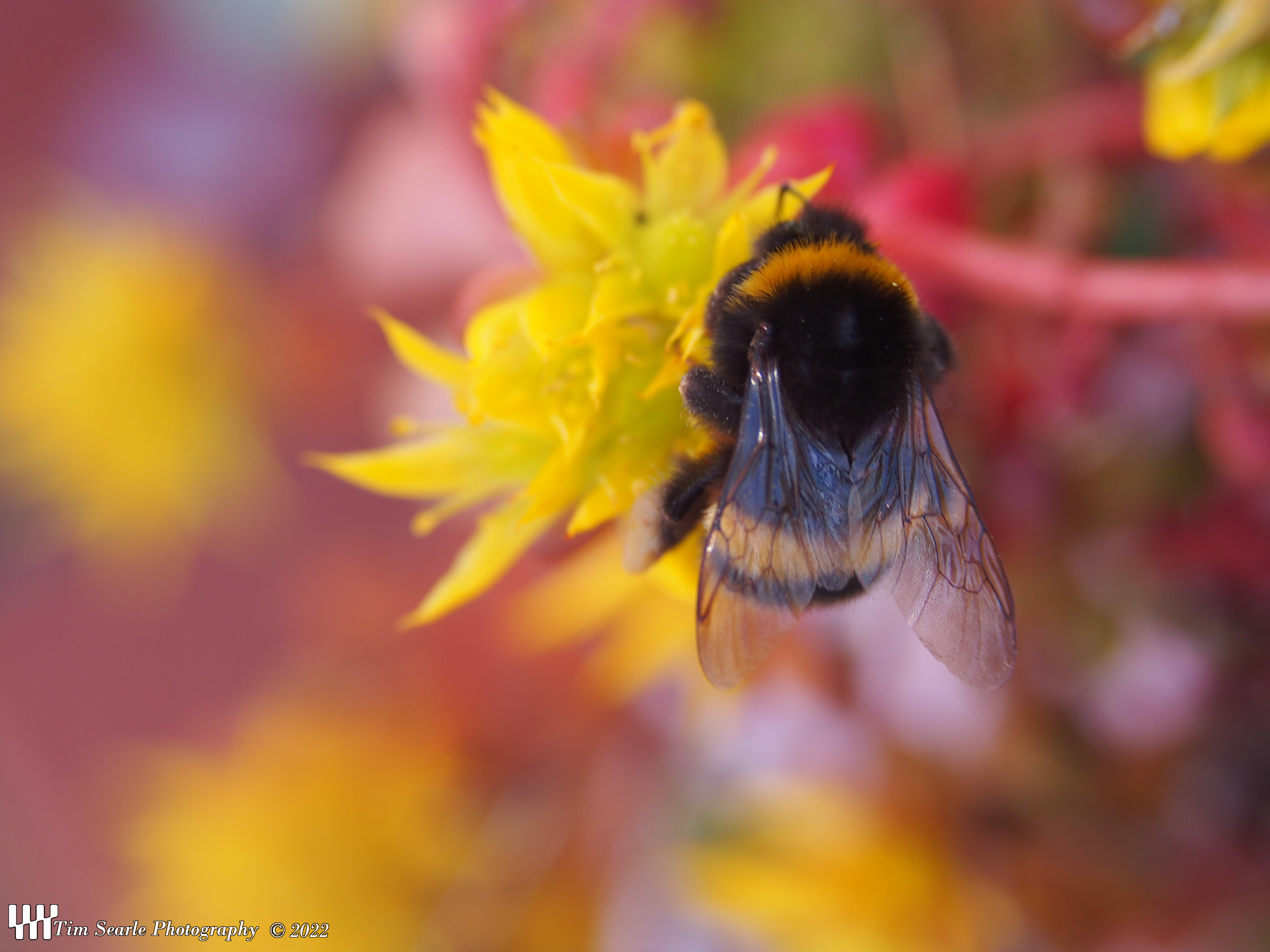
Collecting Nectar
I don't believe that there is a garden lover in the UK that doesn't love to see bees gathering nectar to make honey. This is just such a typically British site. However, from a photographers point of view, capturing something that flits around so much can be quite frustrating. However, given a little bit of patience and a good position around the flowerheads, this can still be very enjoyable. Trying to get close enough to capture the detail in the fur & the delicate lacing of the wings pays dividends when the picture comes out well The blurring of the background, known as Bokah, makes the subject stand out even more, which is helped by keeping the apature fairly wide - f5 in this case..
OMD PEN E-PL5 - f5 - 1/125th - ISO200 - 40mm
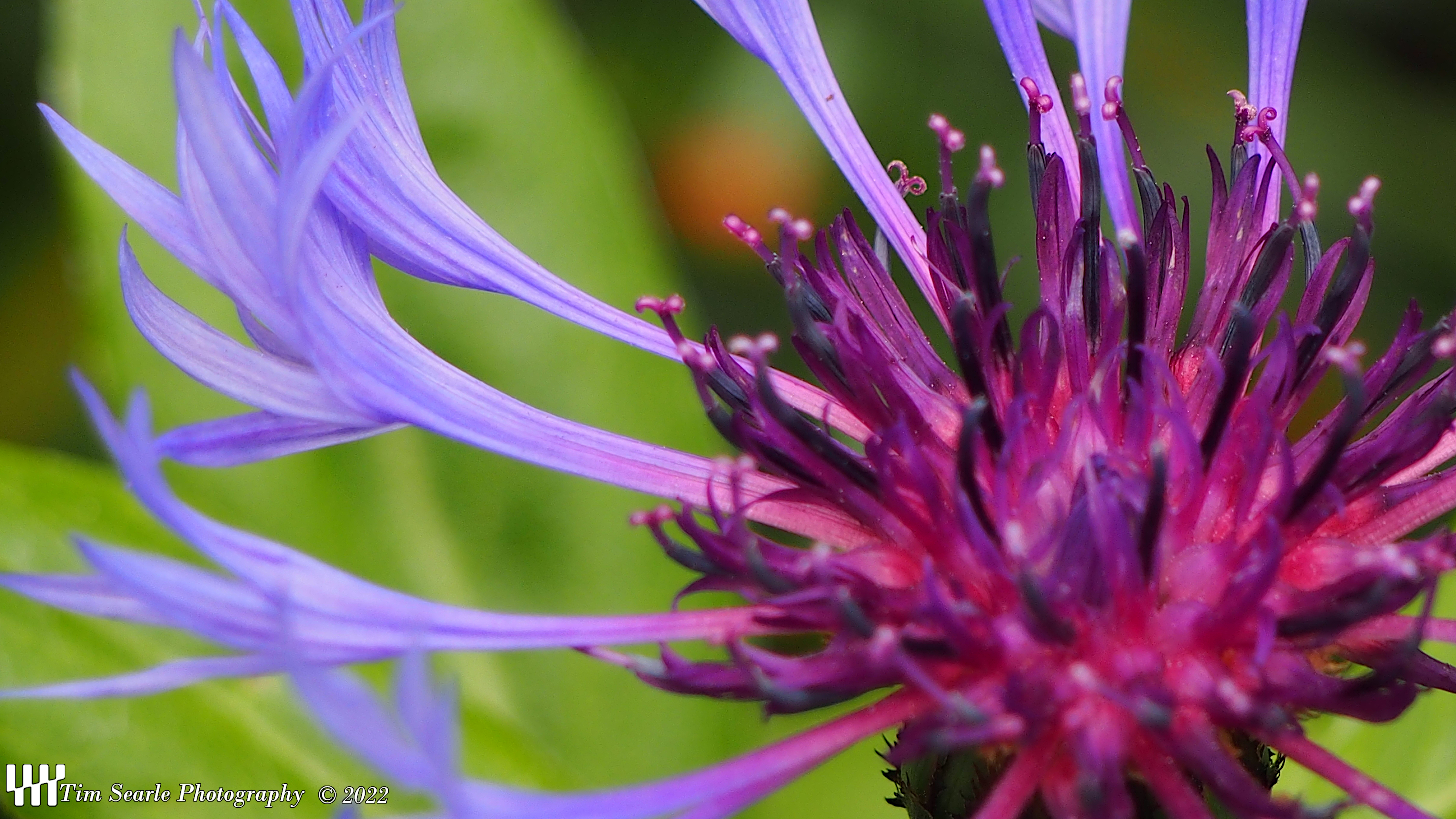
Cornflower
This isn't, strictly speaking, a Macro picture, but comes into the realms of Close-Up. Taken in my garden, of one of my flowers grown from seed, this close-up shot was captured on a particularly non-windy day. As can be seen by the settings below, the focal distance was 150mm, which means that I used my maximum length lens at full magnification. No Macro tubes were required, but I did use a tripod to ensure the camera was steady. 1/250th speed was enough to make sure no movement occurred, and ISO200 ensured enough light got to the sensor.
Olympus PEN PL5 - f5.6 - 1/250th - ISO200 - 150mm
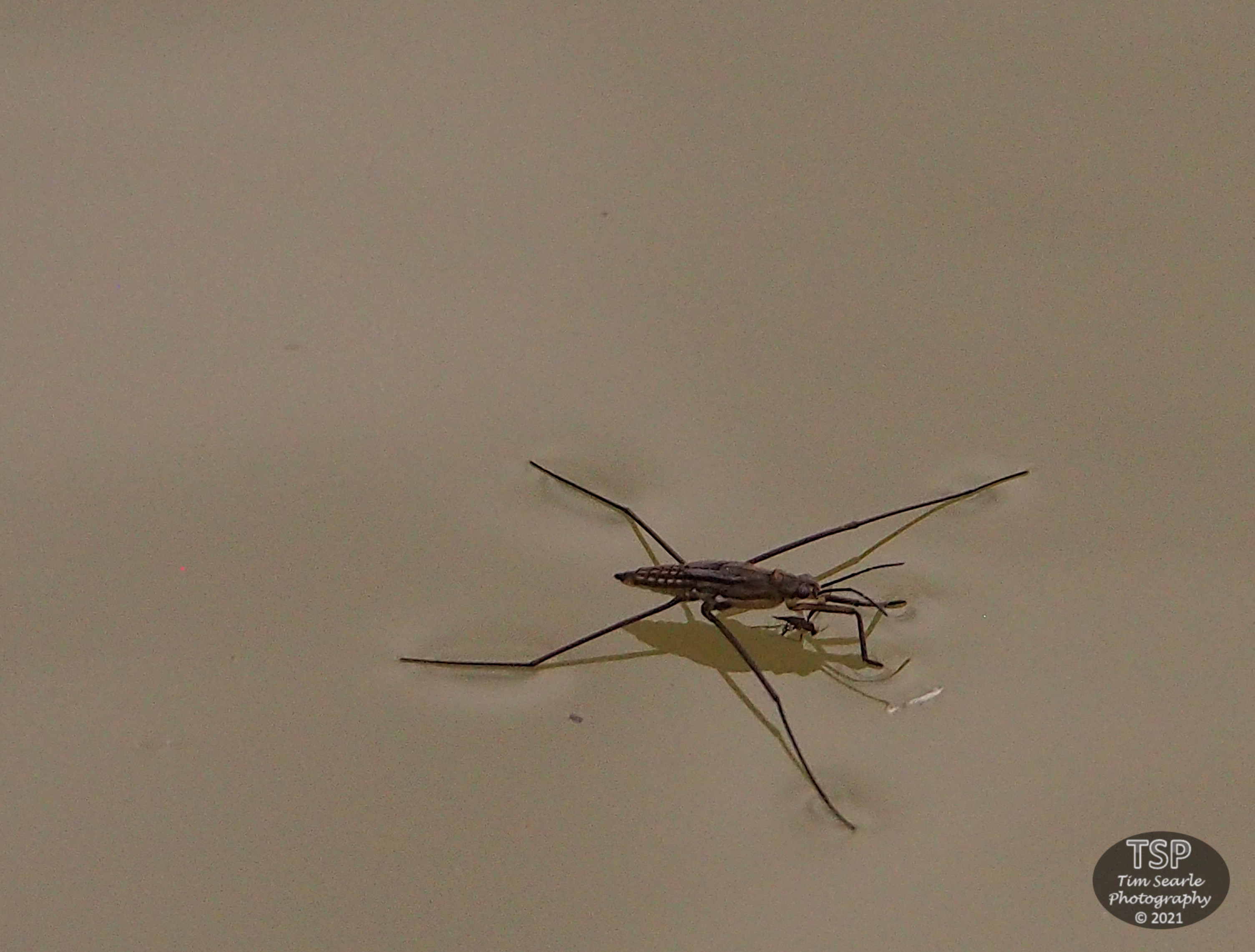
Water Strider
Taken at Thimbleby Lakes, this Water Strider caught my eye as I walked past due to it's sharp movement near the bank. It still fascinates me to think that they can defy the surface of the water, even though I understand how Surface tension works, they are still clever. As I have mentioned before, the diversity of wildlife at Thimbleby Lakes, and other water based venues, can be quite an eye opener. It's always a feeling of achievment when creatures like this can be captured, even though their movements can be fast and irratic.
Olympus PEN PL5 - f6.7 - 1/1250th - ISO800 - 300mm
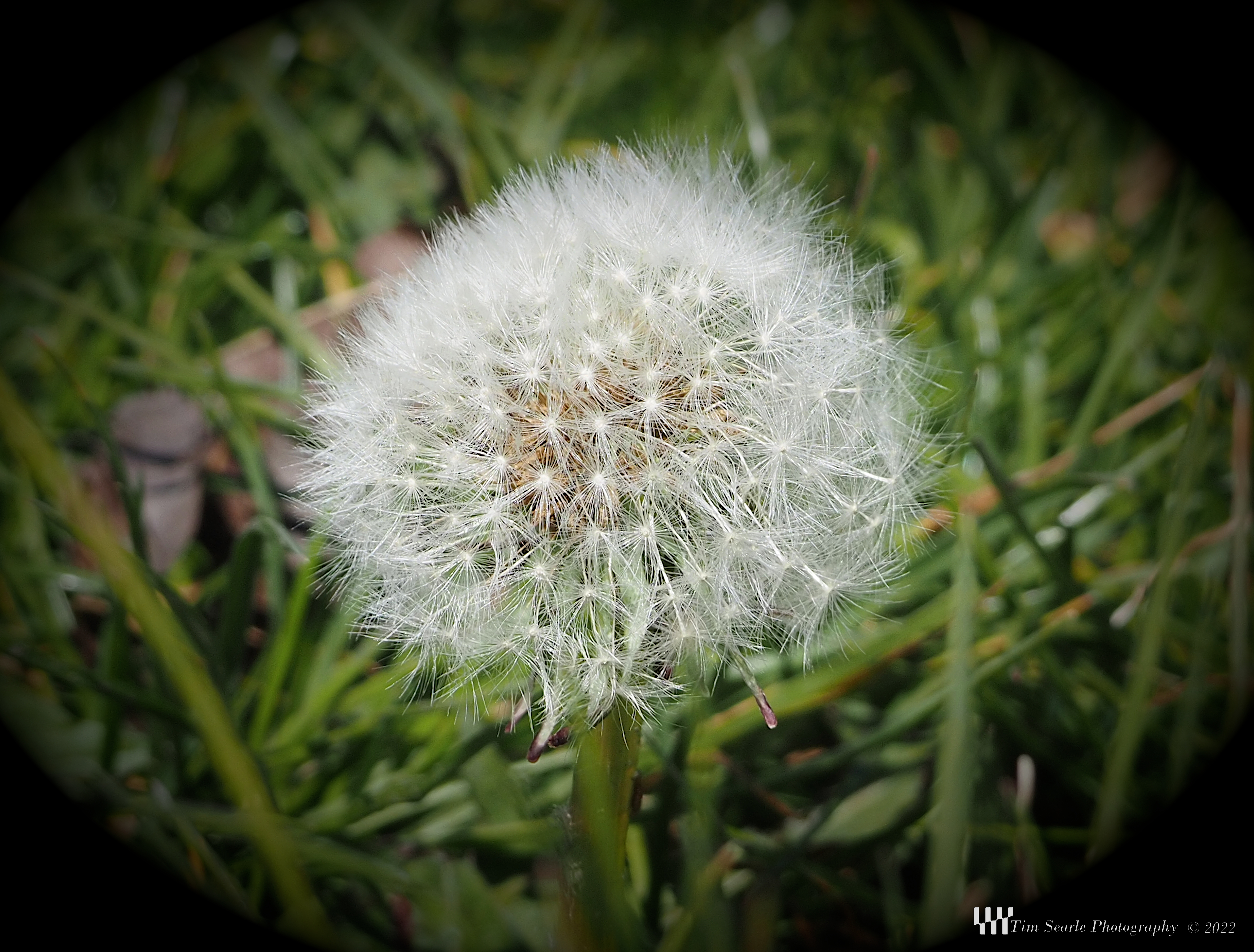
Dandilion Clock
This is a good example of a Close Up, reather than a Macro photograph. It was taken near one of the several layby's I frequent while on a well deserved break. This simple image shows what an ordinary item on the side of the road can look like, even though this sort of thing is taken for granted nearly all the time. The beauty and detail in the feather tops of the seeds can be quite spectacular when framed in a nice way. The Vignette adds a circular or eliptical border which can highlight the subject. Notice the settings below, the f8 gives enough depth of field, while still allowing plenty of light in. The 1/400th second at ISO200 gives enough light to keep it sharp, even when a slight breeze is blowing. The 75mm focal distance was using the in-built 2X Teleconverter, which, effectively, halves the distance - if I took the picture at 2 feet, it would look like 1 foot away.
OM-D E-M5 mkiii ~ f8 ~ 1/400th ~ ISO200 ~ 75mm ~ +0.3Exp
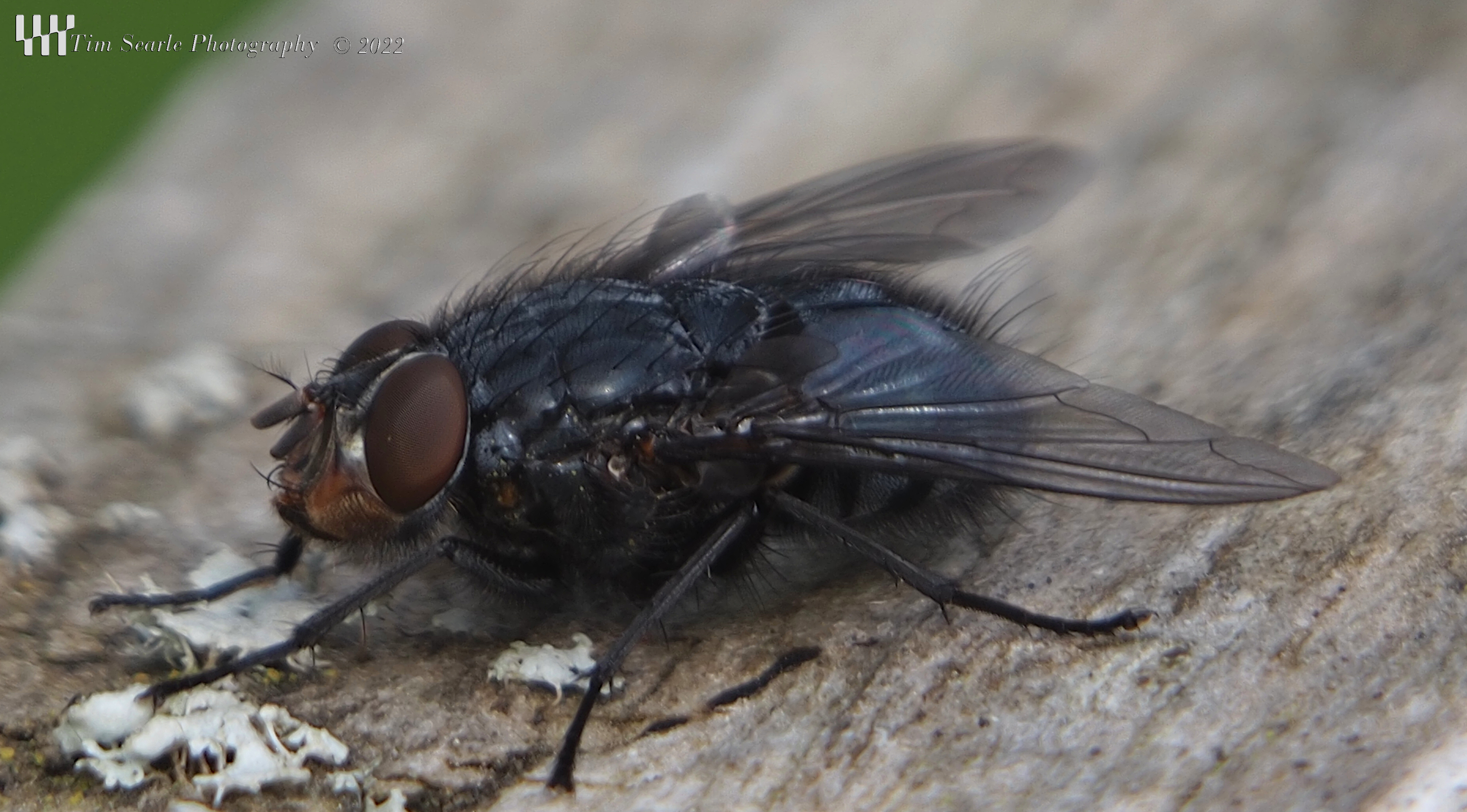
Macro Fly
This is most definately classed as a Macro image. Having fitted my 75 - 150mm lens, and added Macro Tubes, I was able to get really close to this fly, without it dissapearing before I took the shot. This picture also shows the dissadvantage of this type of picture, the very narrow Field Of Focus. Even the small distance from the front to the back of a fly have different focal distances, and are therefore not all in focus. The obvious work around this is to take several images at different focal distances, allowing different parts of the fly in focus. Rarely does a fly stay still that long.
OM-D E-M5 mkiii ~ f5.4 ~ 1/100th ~ ISO64 ~ 124mm
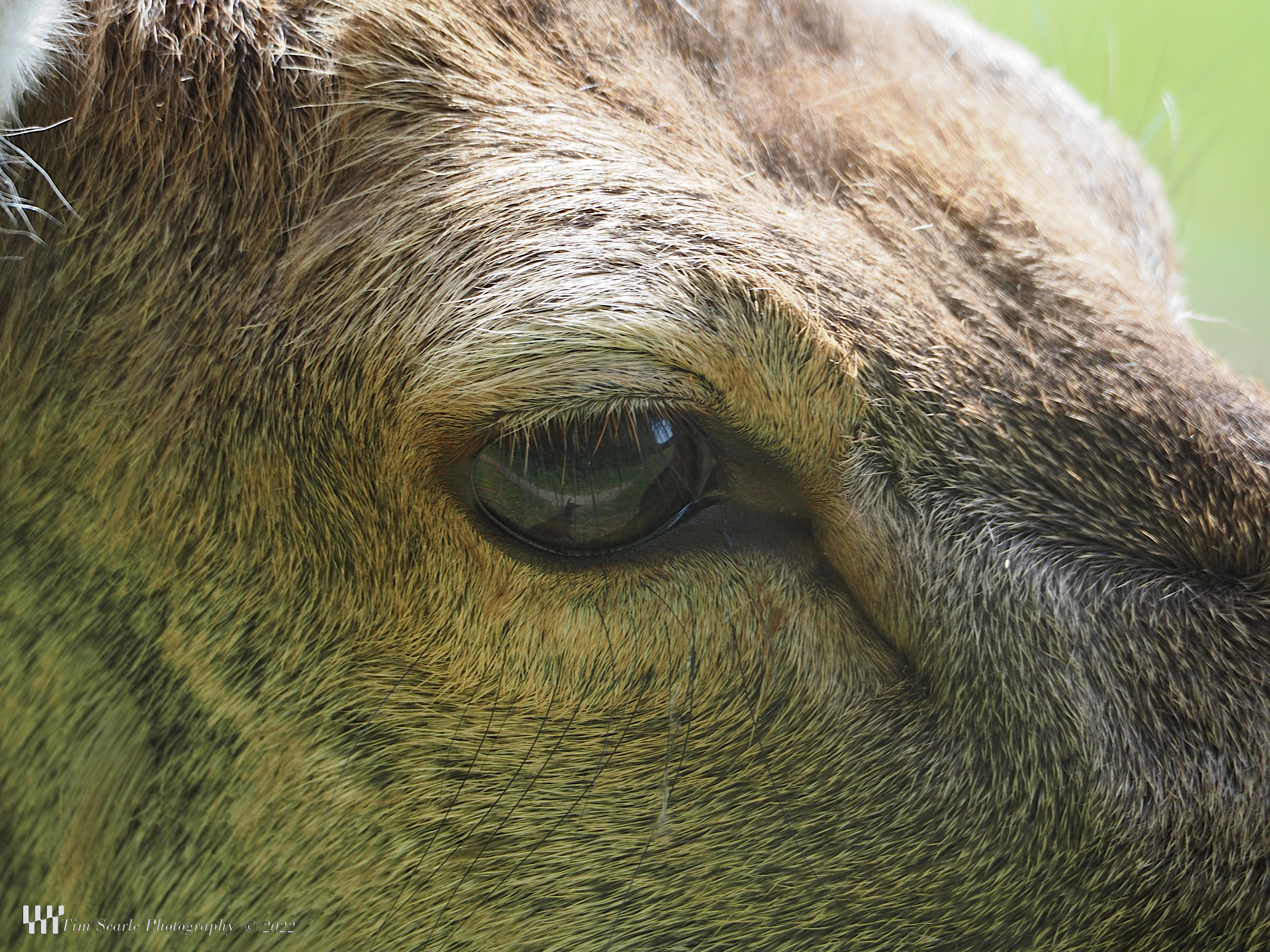
Reindeer Eye
Just outside Horncastle, there are several villages, one of which is called Baumber. Baumber is the home to a Walled Garden, which is in the large grounds of Sturton Estates. These grounds have many creatures and many features which make for great photographs. One of the creatures I have spotted while driving past is their flock of Reindeer. So, I packed my photography gear into the paniers of my motorbike, and headed out one Sunday. This is one of my favourites from the many images I managed to capture that day. Although, not strictly a Macro photograph, this image is an Extreme Closeup.
Olympus E-PL5 ~ f4 ~ 1/80th ~ ISO320 ~ 40mm
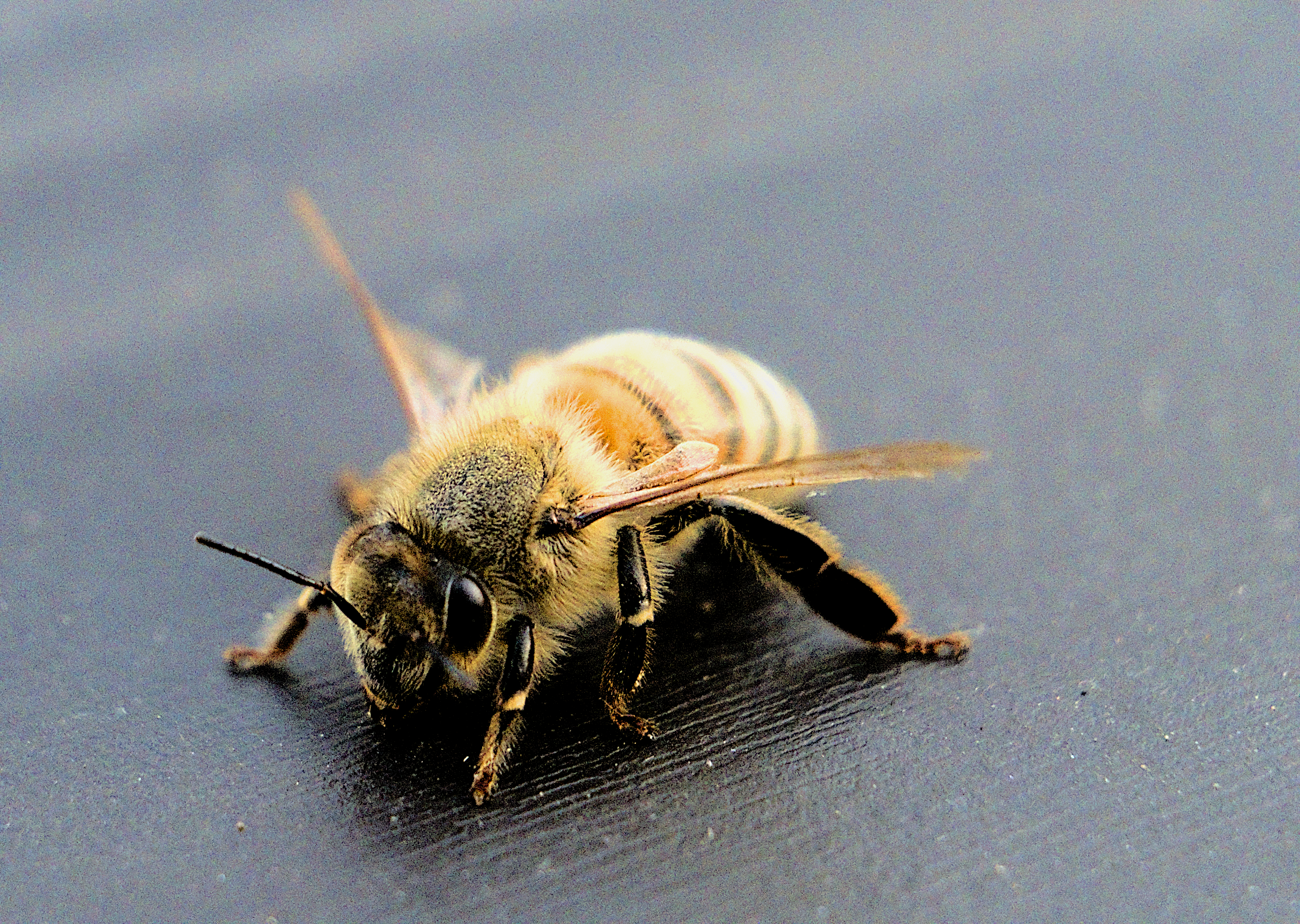
Honey Bee
Probably one of my most recent pictures, This story has a sad end to it. I found this lovely creature struggling to survive in my garden. I tried to help it along it's way, while I took some photos of it. Due to the close proximity, I had to raise the ISO to 400 in an attempt to get more light in. Sadly, the bee didn't make it, and I found it upside down the next morning. As I'm sure everyone realises, these little creatures help humans out every day by pollinatiing flowers & crops for us. They also make honey, which has amazing properties with many health benifits. These tiny animals are one of the most underestimated creatures we have in our ecosystem.
OM-D E-M5 mkiii ~ f3.9 ~ 1/125th ~ ISO400 ~ 42mm ~ 16mm Macro Tube